What to do right now
If you can smell burning, see scorching or notice sparks, we’ll help you make the situation safe without taking risks. Don’t touch damaged sockets, exposed equipment or a consumer unit affected by heat or water. We should treat an electric shock, flooding or a wider power cut differently, as the immediate action depends on the cause.
- Burning smell or scorching: Switch off power at the consumer unit only if it’s safe to do so; call an emergency electrician and 999 if there is fire or smoke.
- Whole street is dark: Check whether neighbours are affected, then report the fault to your electricity network operator rather than interfering with your consumer unit.
- Water has reached electrics: Keep clear, do not touch wet electrical equipment, and isolate the supply only from a dry, safe position.
- Someone has had a shock: Do not touch them until the power is isolated; call 999, begin first aid if safe and follow the operator’s instructions.
If you can smell burning or see scorching
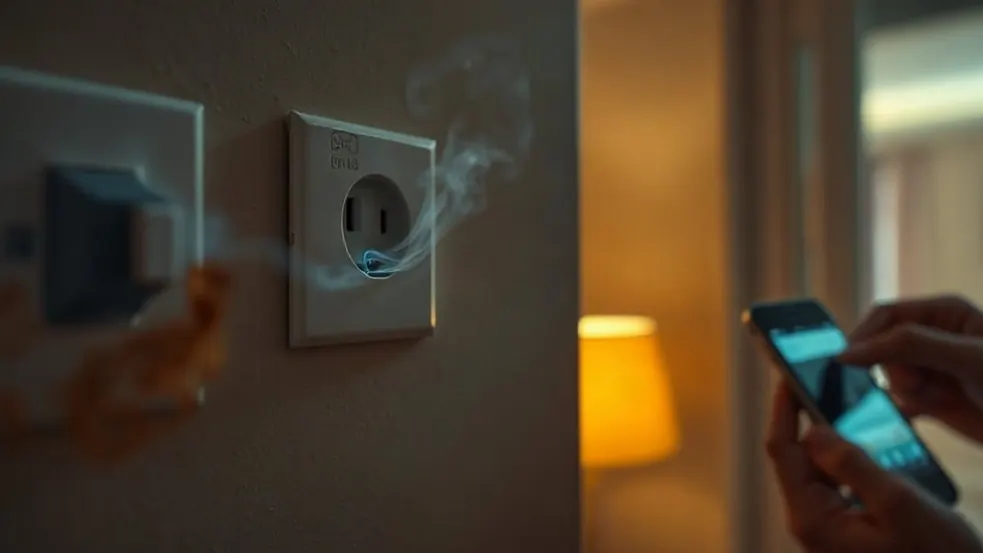
A burning smell, scorch marks or sparks at a socket or consumer unit can indicate overheating, arcing or damaged wiring. Don’t use the affected circuit, socket or appliance again. If it’s safe to do so, switch off the relevant circuit at the consumer unit; if you cannot identify it, switch off the main switch. Never touch exposed conductors, remove covers or pour water on electrical equipment.
If there is smoke, visible flame or a worsening smell, leave the property, call 999 and only re-enter when advised. Check that smoke detectors are operating, but don’t delay leaving to test them. Once the immediate risk is controlled, we can diagnose wombwell-park connections, overloaded circuits, deteriorated cable or a faulty accessory. An appliance inspection may confirm whether a plugged-in item caused the damage. Keep the area clear until a competent electrician attends.
If the whole street is dark
When neighbouring homes and streetlights are also without power, it’s likely a network supply fault rather than a fault within your property. First, check safely from indoors and confirm whether nearby properties are affected; don’t approach substations, overhead lines or damaged street equipment. Check for a National outage through your electricity network operator’s official channels, or call 105 for power-cut information.
Keep the consumer unit cover closed and avoid repeatedly resetting switches, particularly if there has been buzzing, sparking or a burning smell. Unplug sensitive appliances where safe to do so, leave one light switched on to show when supply returns, and use torches rather than candles.
Utility coordination is essential: the network operator manages supply faults, while we can investigate only if power returns and your consumer unit continues to trip or electrical damage is evident.
If water has reached the electrics
Where water has reached a socket, consumer unit, electrical cable or appliance, don’t touch it or attempt to switch anything off at the affected area. Keep everyone clear, stop using nearby electrical equipment and, if it’s safe to do so without approaching water, isolate the supply at the main switch. Don’t stand on wet floors, remove covers or rely on socket isolation where moisture may have travelled through cables or accessories.
Water ingress can cause insulation failure, corrosion and delayed faults, even after surfaces appear dry. We’ll identify the source, assess affected circuits, test insulation resistance and verify protective devices before any supply is restored. If flooding, a leak or rainwater entry is continuing, arrange for the water source to be controlled and contact an emergency electrician. Don’t reconnect appliances until they’ve been inspected and confirmed safe.
If someone has had a shock
If someone has had an electric shock, don’t touch them until the electrical supply has been isolated, as you could become part of the circuit. Switch off the consumer unit only if it’s safe to reach and there is no fire, water or damaged equipment nearby. If you can’t isolate it safely, call 999 immediately and follow ambulance advice.
Once the supply is confirmed off, provide first aid within your competence. Check responsiveness and breathing; begin CPR only if advised by the emergency operator. Electrical injuries can cause internal damage, heart-rhythm problems and delayed burns, even where marks seem minor. We recommend urgent medical assessment after any significant shock, loss of consciousness, chest pain, burns or ongoing tingling. Don’t reconnect the circuit or use the socket. Arrange shock reporting and inspection by a qualified electrician before power is restored.
How fast we get to Northfleet
We aim to attend electrical emergencies in Northfleet within 60 minutes where possible; call our 24‑hour emergency line for the earliest safe response. For a burning smell, sparking socket or consumer‑unit fault in Northfleet, we’ll treat it as an electrical emergency and use our emergency line to arrange the earliest safe attendance. We’re based at The Old Rectory Business Centre, off Springhead Road, so we can dispatch across DA11 and nearby Rosherville, Ebbsfleet, Swanscombe, Springhead and Wombwell Park promptly.
Response times depend on engineer availability, the severity reported and traffic delays, particularly around town‑centre routes and peak periods. When you call, tell us whether there is smoke, heat, visible sparking, loss of power or a tripped protective device — this helps us prioritise safely and prepare appropriate test equipment.
Until we arrive, don’t touch damaged accessories or remove covers. If it is safe, isolate the affected circuit at the consumer unit; otherwise keep clear and call emergency services if you suspect fire.
What an emergency call-out costs
Emergency call-outs are charged at £120 per hour (including VAT) with a one-hour minimum for out-of-hours attendance; we make the installation safe, diagnose immediate risks and test before any remedial work, and will provide a fixed written price before work begins. If there is heat, smoke or active sparking, isolate power where safe and call us.
| Job | Price | What's included |
|---|---|---|
| Out-of-hours attendance | £120 per hour | One-hour minimum; emergency attendance to make installation safe, diagnose immediate risk, testing and written fixed price before remedial work; parts, labour, testing, certification and VAT included in quoted work |
| Minimum attendance | One hour | Charged at the out-of-hours rate (£120) as the minimum billed period |
Excluded: making good plaster or decoration, asbestos removal, DNO supply-upgrade charges, and scaffold or access equipment.
Faults we attend most often
- Sockets or plugs look blackened or melted
-
Usually means something in the circuit has overheated and needs inspection to avoid fire risk.
-
Plugs or sockets buzz, crackle or give a small shock when you touch them
-
Often a wombwell-park or failing connection that can get worse and become dangerous.
-
A socket or appliance lead feels hot to the touch
-
Typically indicates an overloaded circuit or a poor connection creating excess heat.
-
A plug or appliance lead is frayed, split or the wires are exposed
-
Signs of damaged insulation that can cause shocks or short circuits.
-
Your lights flicker or dim when you switch the kettle, heater or other big appliance on
-
Usually the circuit is being overloaded or there's a poor connection causing voltage drop.
-
A particular appliance always trips the RCD or circuit-breaker
-
Often means the appliance or its circuit has a fault or is drawing more current than the circuit can safely handle.
-
An RCD or breaker keeps tripping again and again even after you reset it
-
This can indicate a developing fault that needs diagnosing rather than repeated resets.
-
Plugs don’t sit firmly in sockets or sockets feel wombwell-park
-
Typically worn or damaged sockets that should be replaced before they cause arcing.
-
Switches are stiff, sparky or don’t work reliably
-
Points to worn switch mechanisms or internal wombwell-park connections.
-
Smell of burning or scorched plastic near sockets, switches or consumer unit
-
A clear warning of overheating components or a failing connection—turn things off and get it checked urgently.
-
Old wiring feels brittle or is showing up during rewiring work
-
Age-related deterioration that increases fire and shock risk and usually merits replacement.
-
Extensions or multi-socket adaptors trip when you plug in multiple appliances
- A sign you’re exceeding the extension’s or circuit’s safe load and need a better arrangement or dedicated circuit.
What we can usually fix on the first visit
Once we’ve made the installation safe, we can often diagnose and rectify the immediate fault on the first visit: replacing a heat-damaged socket or switch, renewing a wombwell-park connection, isolating a faulty appliance circuit, or replacing failed protective devices in the consumer unit where appropriate.
We’ll test the affected circuit, check polarity, earthing, insulation resistance and protective-device operation before restoring supply. Socket replacement is suitable only where the wiring and terminations test satisfactorily; a new faceplate cannot make deteriorated cable safe. A Fuse upgrade may be appropriate if compatible, correctly rated and supported by the installation’s condition, but we won’t increase protection ratings to stop nuisance tripping. Where heat has damaged cables, accessories or the consumer unit, we’ll isolate the risk and explain any further remedial work required.
Areas we reach fastest
If you smell burning, see sparking or hear buzzing, switch off the affected circuit only if safe, keep clear and call us.
We prioritise diagnostic checks to identify heat damage, wombwell-park connections, overloaded circuits or deteriorated cable before carrying out compliant repairs. In Swanscombe and central terraces, Victorian rewires may involve ageing VIR or rubber insulation. Flood prone properties near the river may require additional checks for moisture ingress. We’ll isolate hazards, test safely and explain the findings before work begins.